
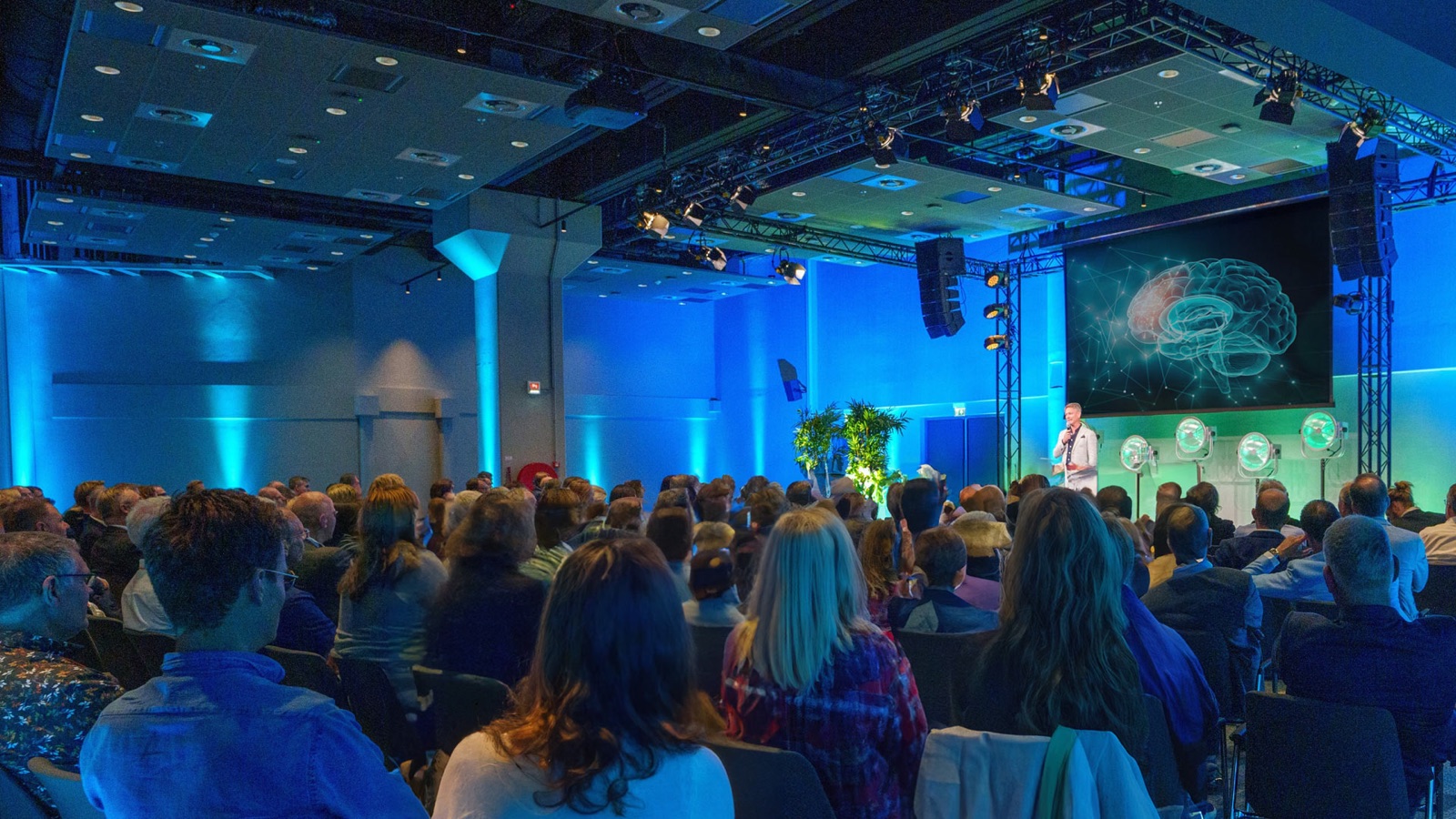
The location has been booked, the program has been set and the lunch takes every preference into account. Only the question of what should be done after the team day still lies somewhere between two action lists. That's understandable. Organizing a meeting requires attention to many visible components. The sequel has less decor and no caterer to ask for it. Yet it becomes clear on an ordinary Tuesday whether the shared experience has a place in the work. Preparation therefore ideally starts with a situation that may be different on that Tuesday.
A team day can have different goals. People meet each other, celebrate something or gain a new perspective. That in itself is valuable. Not every meeting has to be a change program. It does help to choose honestly. If the organization wants to tackle a difficult collaboration problem, this requires something other than a festive conclusion to a conference. An energetic program can support both, but does not eliminate the need for clear intention. Otherwise, participants and organizers unknowingly expect different results from the same afternoon.
Choose a recognizable tension
A theme like connection is broad. A concrete reason is more useful: two departments do not understand each other's planning sufficiently, employees work dispersed or a new course raises questions. Describe what happens at work without immediately assigning blame. This gives the speaker and the organization direction. It also prevents the meeting from being announced as a pleasant afternoon, while everyone discovers upon arrival that a corrective discussion about the team's performance is actually planned.
Share examples in advance that are representative, but do not identify a colleague as a recognizable problem. A general pattern is often sufficient. The department that receives everything at the last minute, the project leader who cannot find a decision or the employee who does not know where a question belongs: such situations provide meaning. It is not necessary to provide a file with names. The goal is recognition and research. A stage is not a suitable place to have individual problems corrected in a roundabout way.
Let expectations fit the form
A keynote can provide a shared experience and new language. A work session can provide time to work out an agreement. A difficult decision may require a separate process. Make those differences clear. Anyone who expects one afternoon to solve a long-standing pattern is asking too much of the meeting and not enough of the organization itself. That does not necessarily reduce the ambition. It helps to choose the role of the day precisely and give the remaining work an owner somewhere else.
The program does not have to be full to be serious. If each part is immediately followed by the next, there is little opportunity to discuss with colleagues what was recognizable. A short exchange can help to connect insights to your own work. Make sure that the exchange fits the time and the group. A personal question in a large room can evoke something different than in a small team. Participants do not have to unexpectedly provide more openness than the meeting announced.
The sequel may be small
Afterwards, ask which specific moment deserves attention. Perhaps the handover between two departments or the way new priorities are communicated. Choose one appointment that is within the team's control. Who does what else? What is required for this? When will you look back? In this way, a major theme is linked to a recognizable action. The agreement does not have to be original. It must especially be feasible on a day when customers call, colleagues are absent and the program is no longer posted anywhere.
Also indicate who will monitor the follow-up. Without an owner, a shared wish can surprisingly quickly become no one's job. This does not always have to be the manager, but the responsibility must match the authority. An employee can organize a meeting, but cannot independently free up capacity that is determined elsewhere. So see what support remains necessary. Otherwise, after an inspiring meeting, someone will be faced with the difficult task of converting enthusiasm into change without access to the resources needed to do so.
An appropriate substantive choice
Paul Smit, Arno Folkerts and the masterclasses at Folkerts & Smit offer various substantive input. Before making a choice, it is useful to describe what participants recognize and where the emphasis should be. Is it about your own behavior, shared culture or deepening a specific work question? That is information that can be used for substantive coordination. The fame of a name is not the only relevant consideration. The connection with the intention and the audience deserves at least as much attention in the preparation.
After a few weeks, look back without reducing the day to a single number. Was the meeting pleasant? That may be asked. But if a follow-up was also agreed, look at what was implemented. Which arrangement worked? What got stuck? What still needs to be arranged by the organization itself? High appreciation and difficult execution can exist at the same time. That doesn't make the meeting worthless. It prevents a pleasant memory from being confused with a completed change process that still requires real work.
The team day does not only start when the lights in the room dim. He starts with the question of which meeting or conversation is necessary. And if the organization wants more than a nice afternoon, this includes a Tuesday on which the sequel becomes recognizable. One better transfer, one fairer priority or one agreement that remains. That sounds modest next to a large program. It is something that employees can notice when the badges are put away and daily collaboration resumes.