
The wall says that people make the difference. The schedule states that one colleague must always shift when another needs something. Both messages are clear, but only the second has consequences for Thursday afternoon. That makes a schedule an interesting place to talk about trust. Not because every plan can work out fairly for everyone. Because you can see how an organization deals with wishes, boundaries and exceptions when not everything is possible at the same time.
Trust is often discussed as if it is a feeling that you can order directly. There will be a team day, an exercise and a conversation about openness. That can be valuable. Yet the next morning the question returns to ordinary decisions. Is a promise kept? Does anyone get an explanation if something goes differently? Do agreements also apply to people in a strong position? An organization can use warm words and at the same time act unclearly. The planning is sometimes more honest about the actual relationships than the core values.
The exception that becomes a habit
Imagine a team where employees take turns working a less popular shift. There is a clear agreement, but one colleague is regularly given an exception. Perhaps there is a good reason for this that cannot be shared publicly. The rest only know that the distribution is shifting. Then it is unwise to immediately refer to irritation as a lack of collegiality. People try to understand how the agreement works and whether their own boundaries have the same weight.
Privacy and explanation do not have to be mutually exclusive. A manager can say that a special agreement applies temporarily, without disclosing personal circumstances. He can also indicate how the additional burden will be distributed and when the situation will be reexamined. The team doesn't have to vote on someone's private life. It does need information about its own work. Where that explanation is lacking, room is created for suspicions that no one likes and that will not disappear with a general call for trust.
Promises with a way back
A commitment feels reliable when it is clear what will happen if it turns out not to be feasible. That sounds less attractive than simply promising that something will turn out well. Still, it makes a difference when you have a busy schedule. Anyone who says on Monday that they will return to a leave request by Wednesday at the latest can also honestly report on Wednesday that there is still one outstanding dependency. Then the agreement is not completed perfectly, but the employee does not have to chase after a missing promise. That predictability is concrete.
The same applies between colleagues. If you ask someone to take over a task, make it clear how much work it is and what support remains possible. A small request that turns out to cost half a day can make cooperation more expensive. Next time, each request will be thoroughly investigated first. That is not necessarily distrust as a character trait. It may be a logical response to previous ambiguity. Those who want more flexibility can start by indicating more precisely what they are actually asking for.
Boundaries are part of the conversation
Trust does not mean that someone says yes to everything. An employee who reports in time that something does not fit provides useful information for planning. If such a report is met with disappointment about team spirit, everyone learns a different lesson: limitations are better hidden until it is too late. It helps to distinguish between thinking along and having unlimited availability. Someone can be involved and still have a boundary. A workable agreement must be able to include both.
There may be times when extra effort is required. Then state that it is an exception and discuss what will be adjusted later. Otherwise, a normal working week will arise that is structurally dependent on exceptional willingness. On paper the grid is round; in practice, a small group of people keep an eye on things. Anyone who looks at trust must therefore also look at the distribution of discomfort. The team feeling does not become more credible because the same colleague is always the first to drop his own appointment.
Making collaboration visible
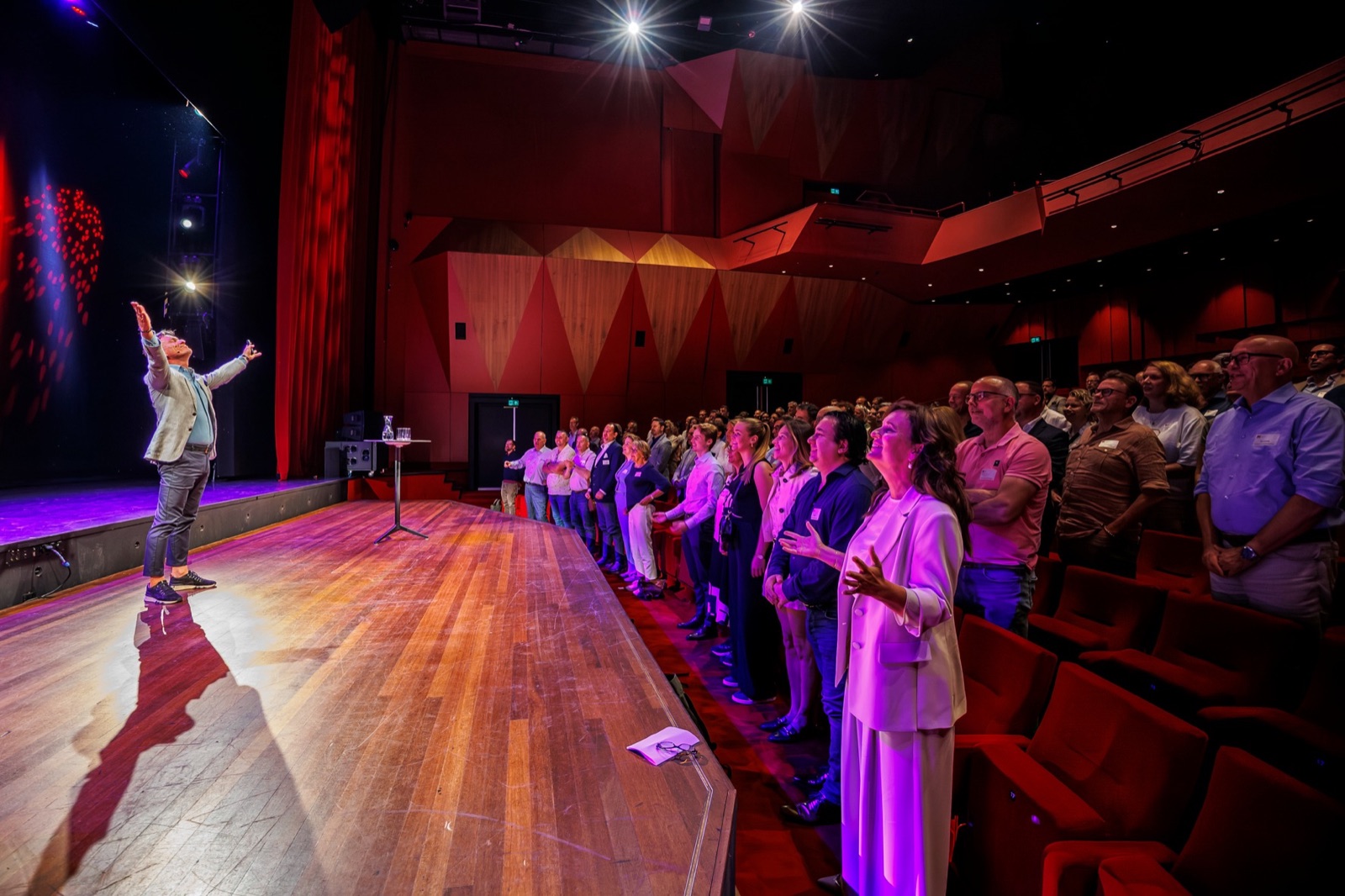
Arno Folkerts approaches collaboration from the we. For a schedule, this means looking at the whole and the consequences for individual people. Which task is still missing? Who will automatically be asked to step in? Who dares to reject a request? These are useful topics for a team discussion, as long as it does not become a public assessment of everyone's efforts. Start with the distribution and the agreement. Personal circumstances can then be discussed at an appropriate location.
For example, look back at four weeks. What exceptions were there, how were they resolved and what needs to be structurally different? Additional staffing may be necessary. Perhaps the substitution rules are unclear. Perhaps a particular colleague is always called upon because his help seems readily available. In this way, a big word like trust is linked to something that you can change. A new rule is no guarantee. It must be applied, explained and adjusted when practice shows otherwise.
A team can easily spend an afternoon connecting. It is wise to also take the agenda afterwards. Trust sometimes lies in a good conversation, sometimes in a kept promise and sometimes in the simple experience that your free afternoon is taken as seriously as someone else's. The wall text may remain hanging. But if the organization wants to know whether people really count, it can start with the question of who should move again this Thursday and why.