
The invitation says brainstorm. There are colorful markers on the table, there is coffee and someone has emphatically said that everything is allowed. The first proposal faces three objections. The second is compared to a project that once failed. In the third, the submitter himself explains why it is probably not feasible. After twenty minutes the chairman asks why there are so few surprising ideas. The group has now neatly demonstrated the answer: new thoughts must immediately bring their own defense with them.
Creativity is often presented as a special quality of certain people. In a work session you can also look at the assignment and the response to proposals. Is it clear which problem is being investigated? Should an idea be immediately implementable or should it first make something visible? Who assesses and when? Without these agreements, an exploratory conversation can unknowingly turn into a decision meeting. The participants with the most detailed proposals then hold the floor for the longest time, while the rest swallow half their thoughts wisely.
Make the issue small enough
An assignment such as coming up with something innovative gives a lot of freedom and little direction. A specific question works differently: how can a customer better understand what the next step is after an initial conversation? Then people can explore different options. Another confirmation, a drawing, a short telephone call or a simpler transfer. Not every possibility has to be new to the world. An existing solution in a different form may already be valuable for this problem. Surprise is not a goal that makes usability obsolete.
Also explain which boundaries are actually fixed. If there is no extra budget, it helps to know this in advance. If a legal or technical restriction is relevant, it is part of the assignment. Boundaries are not automatically the enemy of creativity. Unclear boundaries are especially difficult because they are only mentioned when someone has already invested time in a proposal. Then every objection seems personal, while the session actually had missing instructions. A clear assignment prevents some of that disappointment.
Not rating yet is different from finding everything good
Distinguish between collecting and choosing. In the exploratory phase you can ask what an idea makes possible or what problem it affects. A clumsy proposal sometimes contains a useful element that is lost if it is immediately rejected as a whole. That doesn't mean the idea has to be implemented later. It means that the group first tries to understand what is interesting about it. This gives a first thought the opportunity to yield a second thought.
At the same time, ensure that the assessment phase is not postponed indefinitely. Employees want to know what happens to their proposals. Choose a few criteria in advance, such as clarity for the customer, required capacity and the possibility of small testing. A surprising idea that is not chosen may still have been treated seriously. This requires an explanation. Without feedback, the next brainstorm becomes a ritual in which people are given the same markers again and know more and more that their contribution will probably not go anywhere.
More votes than the fastest vote
Let participants think individually before everyone responds to each other. That is a practical choice to obtain more material, but no guarantee that every team will automatically perform better. Someone can write down an example, draw a process or formulate a question. Then discuss the differences. The colleague who talks fastest does not also have to be tasked with expressing all the group's ideas on behalf of everyone. Useful nuances can disappear when the conversation immediately seeks a common direction.
Also look at a proposal from the perspective of the person who has to work with it. A solution can be elegant for the creator and unclear for the customer. Therefore, show a simple version to someone who was not at the session. Ask what that person thinks he should do. Do not provide a detailed explanation before you have heard the response. Otherwise you mainly test how well you can defend the idea. A rough version yields more when it has an honest encounter with practice.
From new perspective to small trial
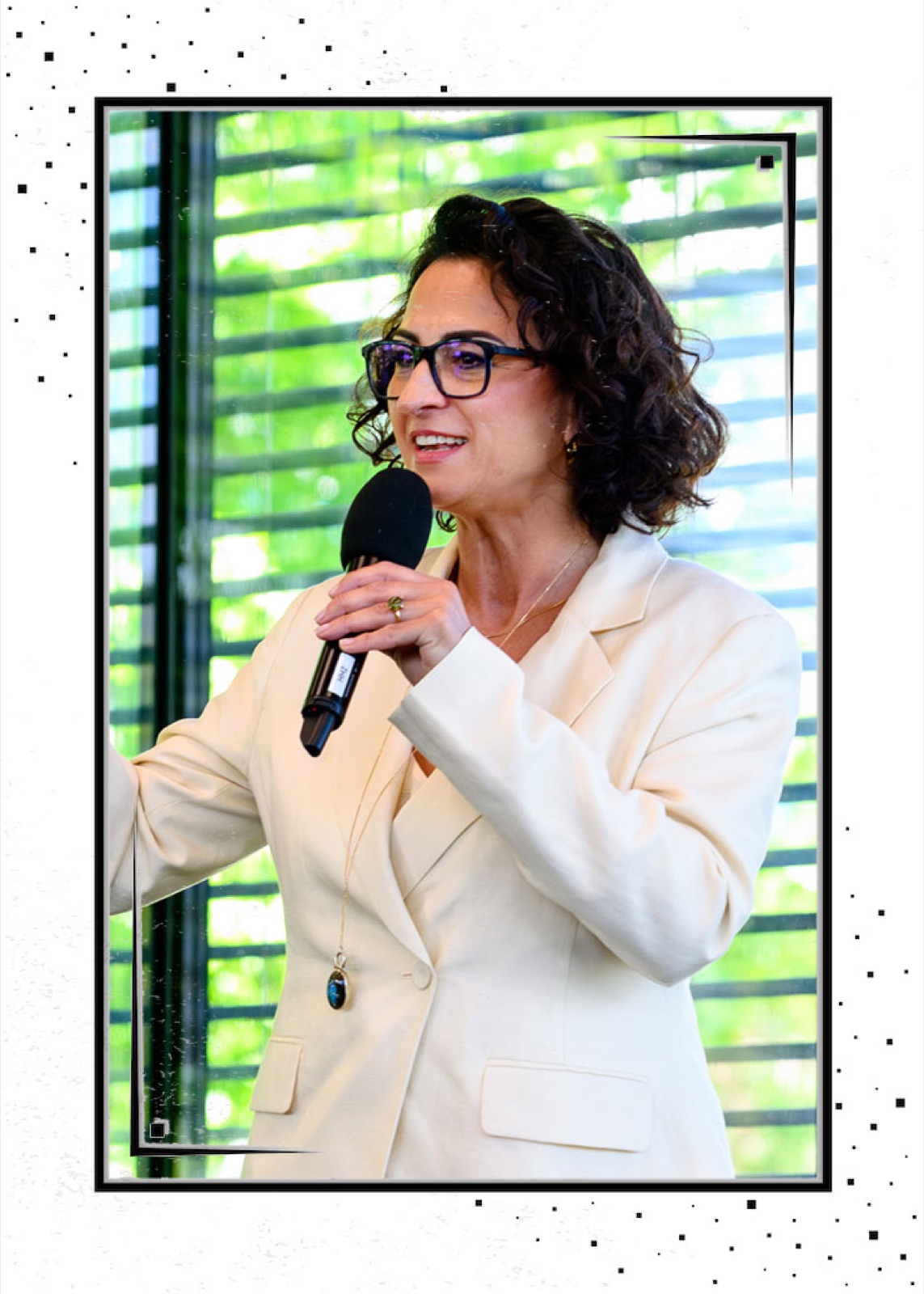
Creativity and focus are among the topics on Ayca Szapora's own website. For an organization, the useful translation is then very concrete: which fixed pattern do you want to investigate and how does an alternative get a first chance? This can be linked to a masterclass on behavior and change. The execution remains the team's responsibility. So appoint someone who will take a selected proposal further, with a date on which it becomes clear whether a small trial is possible.
Protect such a test against too large an assignment. You can try out a new confirmation text in a limited number of situations. This does not require immediately redesigning the entire customer journey. Make a note of what you want to learn. Does the customer understand the next step? Do other questions arise? Does it require additional explanation for employees? A test without a learning question is difficult to assess. A small experiment with a clear question can prevent a nice idea from turning into an extensive project much too early.
Perhaps the first proposal will ultimately prove useless. That is not a disaster, as long as the conversation has yielded something that can be further investigated. An idea does not have to have the same quality upon arrival as a decision upon departure. If the team monitors that difference, markers become tools again instead of decoration. And can anyone express half a thought without first presenting three objections to himself? Sometimes that is exactly where the space that was so generously promised in the invitation begins.