
Suppose an employee now prepares a recurring report in half an hour instead of two hours. There is reason to be satisfied. The next question is often skipped: what happens to the difference? Maybe a customer gets more attention. Perhaps the gap will narrow. Perhaps three more reports will be added at once. Technology has freed up time, but has not decided on its destination. The latter remains a human task, even when the dashboard is already cheerfully green.
In conversations about AI, time savings sometimes sounds like a package that is automatically delivered with job satisfaction. However, there is an organizational trade-off between the two. If the same employee has to deliver faster, check more and keep track of all new applications at the same time, the working day can become fuller. A useful trial with AI therefore starts with two questions: which task do we want to improve and what do we want to spend the freed up space on? Without that second conversation, efficiency automatically becomes more and more hungry.
Look at the entire task
Consider an imaginary consulting firm that uses AI to organize call notes. The first draft appears quickly. Someone must then check whether the main points are correct, agreements are properly stated and no assumption is presented as fact. When only the creation of the concept is measured, the profit appears to be greater than when the entire process is examined. Preparation, control and recovery count for an honest assessment. The work that unknowingly shifts to a colleague is also part of it.
Choose a task for which employees can judge what is good. An impressive answer that no one can verify is not a pleasant basis for a test. Use appropriate data and the environment permitted within the organization. These agreements do not have to paralyze an experiment. They prevent people from starting enthusiastically and only discovering later that they have chosen the wrong route with confidential information. Clear boundaries give an experiment a beginning and an end about which you can say something together.
What does better mean?
Speed is one possible outcome. You can also look at readability, completeness or the ease with which a colleague can take over the work. Agree in advance what quality must be maintained. If a report is completed faster but agreements are less precise, the bill will be returned later. Perhaps AI will be useful for organizing rough notes, while leaving final conclusions to an employee. A task doesn't have to be fully automated to be worthwhile.
Let the people who carry out the work indicate where time is being lost. They can distinguish between a cumbersome action and a necessary conversation. For example, it is quite possible that writing a standard confirmation can be done faster, while listening to a dissatisfied customer requires more attention. When both activities are only listed as minutes, saving seems the same everywhere. The destination of those minutes makes a big difference to the quality of the work.
Discuss the destination
At the start of a test, state what the intention is. Do you want to shorten the waiting time, reduce overtime or create space for complex questions? Those are legitimate goals, but not interchangeable ones. A team that expects less workload will react differently if the freed hours only lead to higher production goals. Honesty about that trade-off is better than letting everyone experiment under a promise that cannot be kept. Otherwise, a useful application will unnecessarily suffer from a trust problem.
Free time also does not have to be completely closed in advance. Perhaps employees discover a useful destination that was not in the plan. Give space for that, but look back together later. What has actually improved? Who got more air? What additional control was necessary? A simple conversation about one working week can be more useful for the next step than an abstract prediction about the future of all functions. AI becomes useful when it becomes clear what it adds to this work.
Technology and human agreements
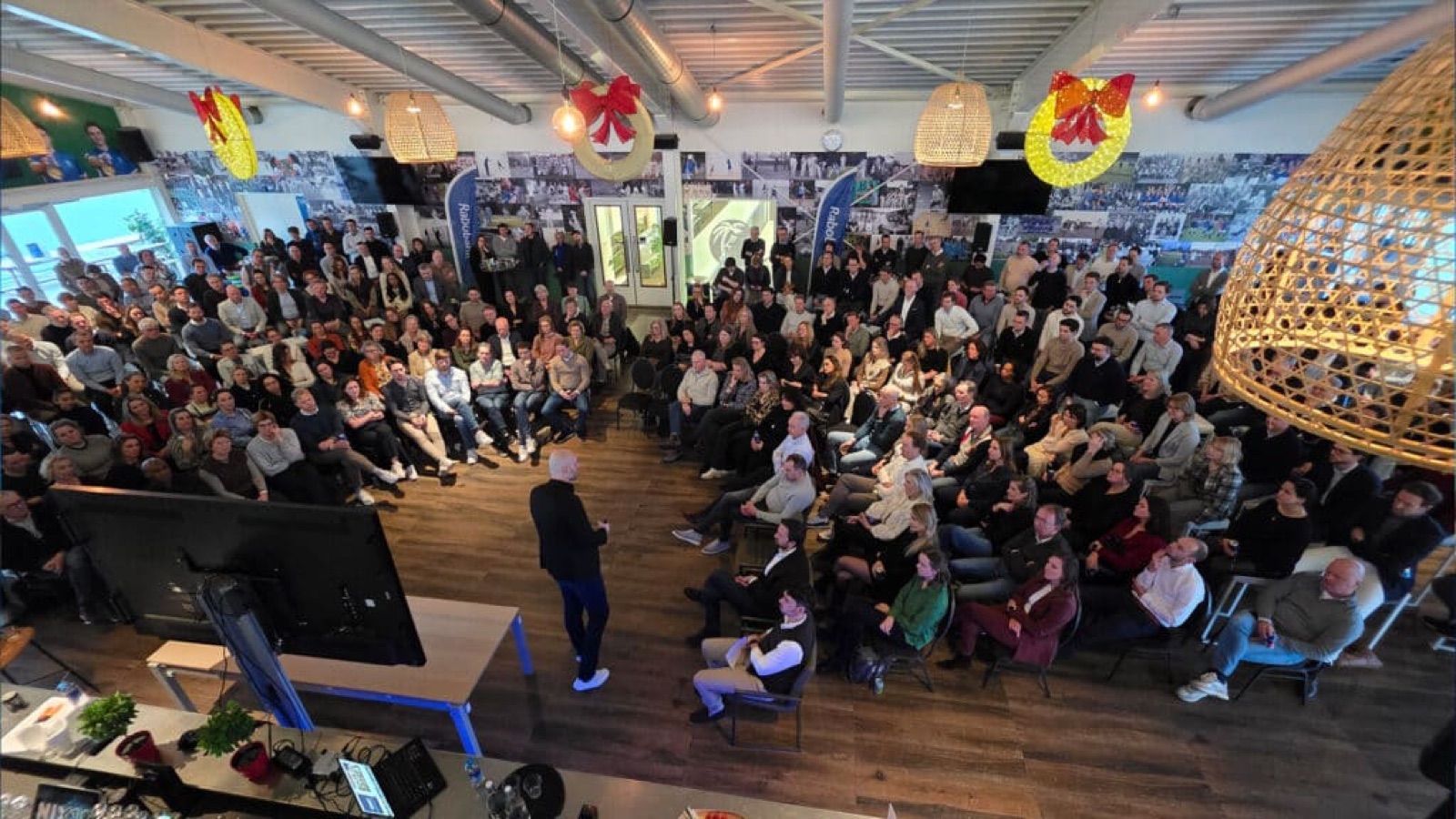
At Folkerts & Smit, this topic ties in with the masterclass AI and job satisfaction with Michel Vos. The practical follow-up question for a team is how an application fits into its own process. To achieve this, managers and employees must look at quality, division of roles and expectations together. A tool can create a proposal. It cannot decide on behalf of the organization how much attention a customer deserves or which trade-off is fair for employees. That conversation deserves its own place at the table.
A sensible retrospective therefore also contains setbacks. Checking may take more time than expected. Maybe the application only works for simple cases. That doesn't make the test a failure; it sharpens the scope. Record when someone uses the regular route and who answers questions. This way, colleagues do not have to decide for themselves whether they are too cautious or too enthusiastic. A joint agreement can provide more peace of mind than yet another list with a hundred possible applications.
Ultimately, saving time is not a destination. It is space over which you can make a choice. Anyone who forgets this can end up with faster reports and just as much haste. Those who do have the conversation may discover that the most important outcome is not another document, but a carefully concluded conversation or a working day that actually ends. The most interesting AI question is not how many minutes the system saves. It is what you both consider important enough to indicate those minutes.